

Islands off Lennox Island to become Canada’s 48th national park

LENNOX ISLAND, P.E.I. — A project nearly two decades in the making has come to fruition.
On July 4, Lennox Island First Nation Chief Darlene Bernard, Abegweit First Nation Chief Junior Gould and Steven Guilbeault, the minister responsible for Parks Canada, signed an agreement to formally establish Pituamkek as a national park reserve.
It will be Canada’s 48th national park.
During the announcement, Bernard and Sen. Brian Francis shared memories of their times visiting the area as children.
“I always found that when I was there, I felt a calmness, I felt connected to my culture and to my heritage and my history,” said Bernard.
“When we talk about reconciliation and all the harms that happened to First Nations people through colonialism … when we were on the sandhills, on Pituamkek, it was a time when we could leave that all behind and just be children and just run along the shore.”
Meanwhile, Francis recalled his time camping under the stars, digging for quahogs and harvesting berries.
“Pituamkek is truly a haven of biodiversity. Its sand dunes, salt marshes and habitats support many species, some of which are rare or endangered,” said Francis. “I cannot wait for others to have an opportunity to visit and make their own memories.”
P.E.I.’s Mi’kmaq governments first brought forward the idea of establishing Pituamkek National Park Reserve in 2006.
The islands off Lennox Island
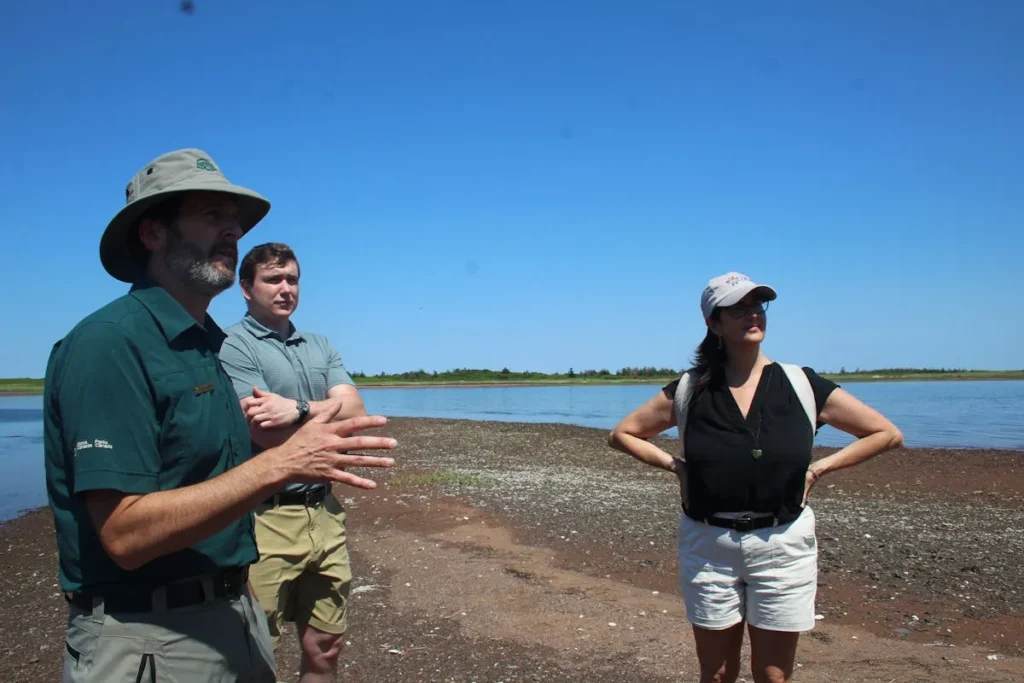
Pituamkek – meaning “at the long sand dune” in the Mi’kmaq language – encompasses a chain of islands on P.E.I.’s North Shore, off the coast of Lennox Island.
“Our people have used this area to sustain ourselves, physically and spiritually, for thousands of years, since time immemorial,” said Bernard.
The site is home to features such as sand dunes, old-growth forests and iron rock – P.E.I.’s only igneous rock formation.
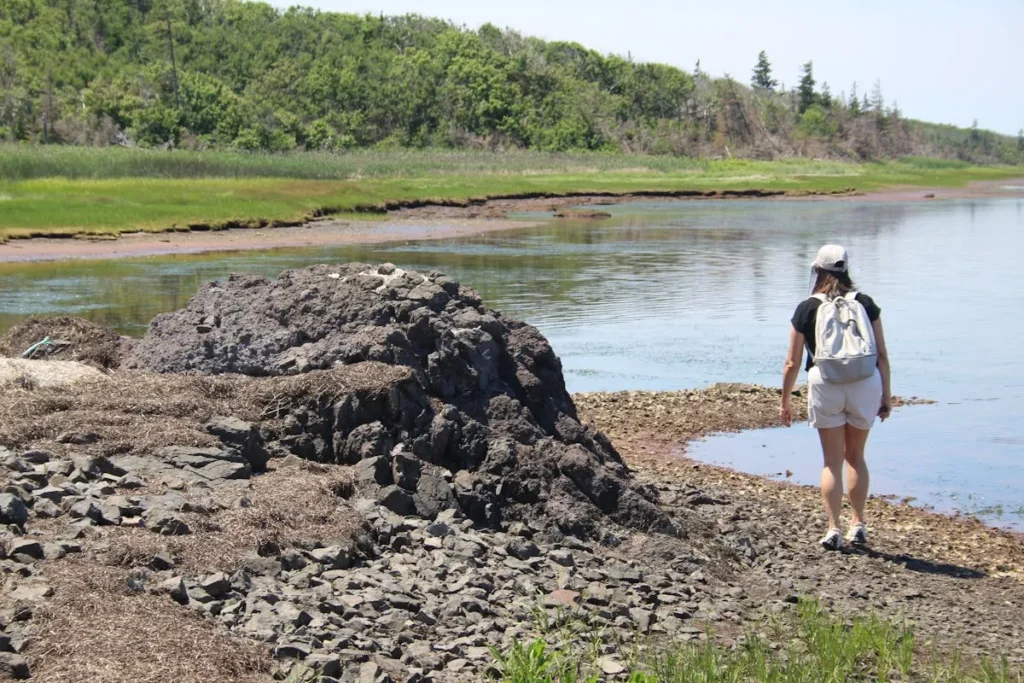
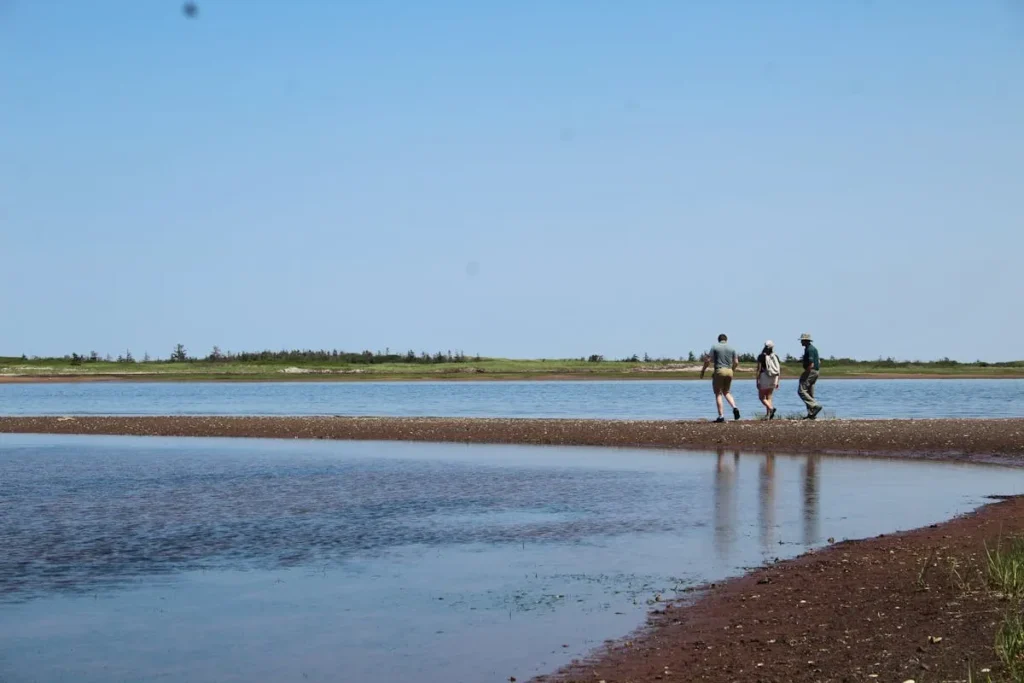
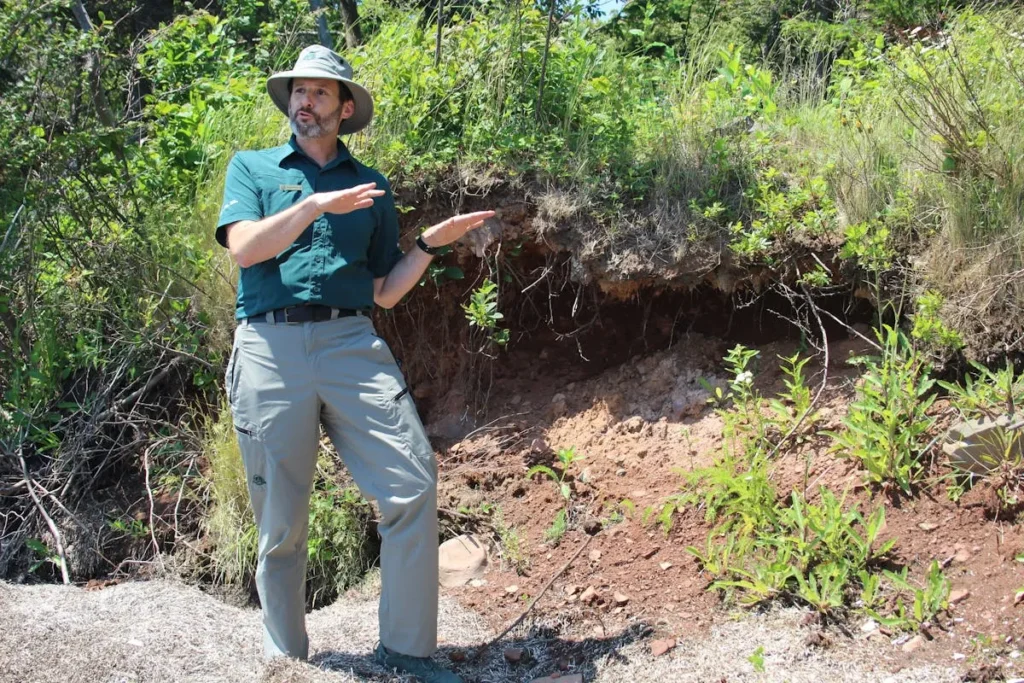
During a July 3 tour of Hog Island, part of the chain, Jesse Francis with Parks Canada showed reporters a shell midden – a cliffside full of old shells and bones left behind generations ago by Mi’kmaq people.
The national park designation will protect the island, as well as recognize and support Mi’kmaq stewardship.
“In that sense, our announcement today represents a bond with our past and a pact for our future,” said Bernard. “A future that protects these sacred lands, as a reflection of the traditional Mi’kmaq respect for the environment, for sustainability, and for our preservation.”
Next steps
Now that there is a signed agreement, a co-management board will be put together – comprised of experts and elders – and community engagement sessions will be held.
“We are looking at some more years of work until it’s fully operational,” said Minister Guilbeault. “But it is really a new way of creating national parks, in partnership with our Indigenous nations.”
A plan will also be formed to one day open the islands to visitors.
For Bernard, as well as Chief Gould, the agreement is about more than just the land – it’s about culture. What the land represents. Truth and reconciliation.
“What we’re doing there today transcends politics. Transcends bureaucracy,” said Gould. “What it is, is our tradition.”