

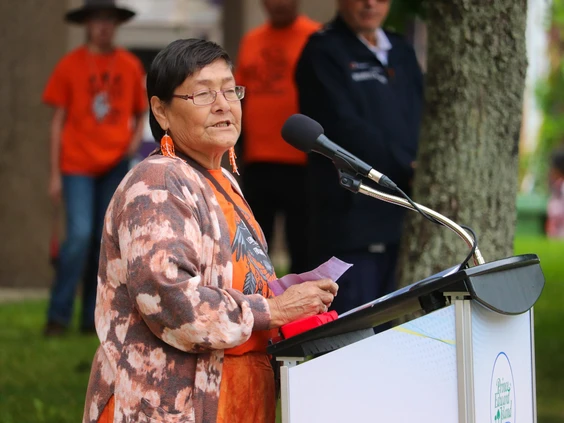
CHARLOTTETOWN, P.E.I. Three years after P.E.I. made Truth and Reconciliation Day an official holiday, residential school survivor Marlene Thomas says love is essential to the work that still needs to be done.
People need to work together to forgive each other, Thomas said at the Sept. 30 National Day for Truth and Reconciliation ceremony.
Thomas, who attended the Shubenacadie residential school in Nova Scotia, said love was the thing missing from the school system.
If we scraped our knee, our parents would kiss our wound and make it better. None of that happened for us in that school. Instead, we got strapped for doing, I dont know, maybe stupid little things, she said outside the Shaw Building in Charlottetown.
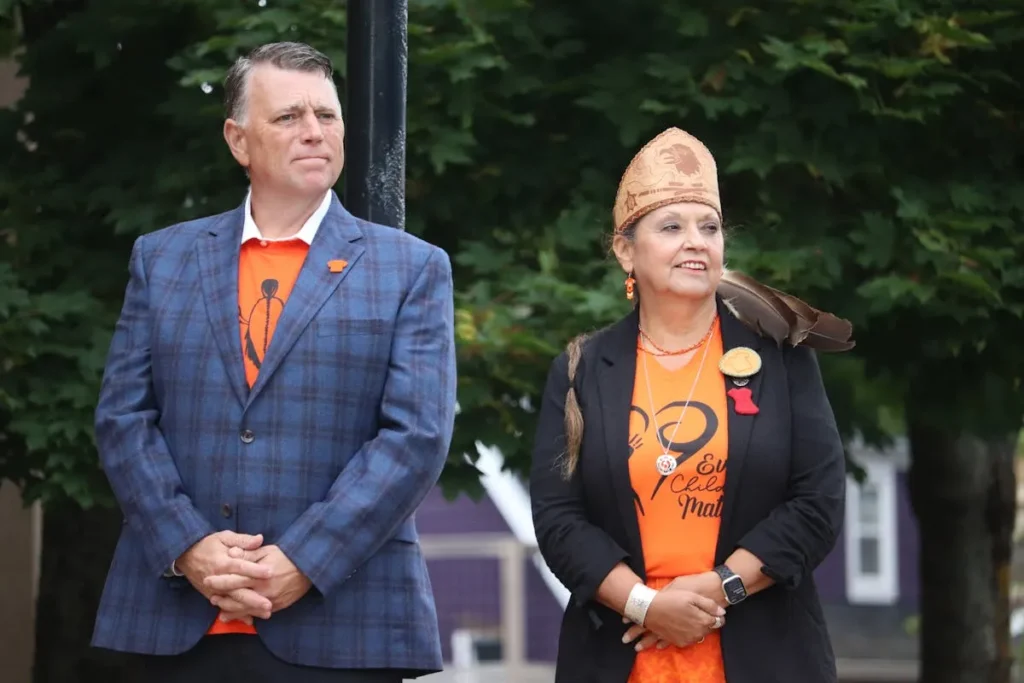
Thomas spoke to a crowd of about 200 people following opening remarks from elder Judy Clark, Premier Dennis King, Lennox Island Chief Darlene Bernard and emcee Julie Pellissier-Lush.
Lost identity
The first things children lost at residential school, Thomas said, was their language, culture and identity. If a child spoke Mikmaw they would be beaten, she said.
The schools sought to take the savage out of its students, forcing a foreign religion on them, Thomas said.
The creator god of the Mikmaq is loving, but the servants of the new god were cruel and taught the children nothing about living a good life, she said.
There was no truth there. There was no honesty. There was no humility. There was no bravery. That was all stripped from us, she said. To me, that is what was missing for our people. And even when we came back home, that was gone.
There was no truth there. There was no honesty. There was no humility. There was no bravery. That was all stripped from us.
– Marlene Thomas
While Thomas speech focused on the past, she opened by saying the community needs to stop calling the police on its members in crisis, alluding to recent news about Indigenous people dying after interactions with police.
On Sept. 12, APTN reported six such deaths since Aug. 29, two weeks earlier.
Im most upset with whats happening with the wellness checks. We have to stop using the law, Thomas said. Thats not a way to settle it. Its not a way to help our people. Theyre not well. They dont need to have people coming in with guns or tasers. What we need is health workers going in.
Ability to rebuild
Bernard, who spoke before Thomas, said the survival of her community and ability to rebuild is a testament to their spirit.
In the faces of our children today, I see hope. I see pride in their identity, pride in their culture, and pride in being Mikmaq.
Reconciliation is not an Indigenous issue, but a Canadian one, she said. And while residential schools can feel like history, the last school closure was in 1996, less than 30 years ago, she said.
The school Thomas attended was open from 1930-1967.