

TYNE VALLEY, P.E.I. — Researching and preserving the Hog Island sandhills is about more than science.
For members of the Pituamkek conservation project, it’s about culture.
“This has been great for me, as well as for everyone else,” said Keptin Jim Bernard. “I like doing stuff like this, the basket weaving, the building of wigwams, canoes, stuff like that … It’s a passion for me. It’s a great addition to the program they didn’t have last year.”
Hog Island is one of the sandhill features near Lennox Island First Nation which help protect P.E.I.’s north shore. It is also part of the in-development Pituamkek National Park Reserve.
Bernard, a Mi’kmaq elder, joined the Pituamkek conservation project this summer to captain boats to Hog Island – as well as to introduce the cultural aspects of the area to visitors.
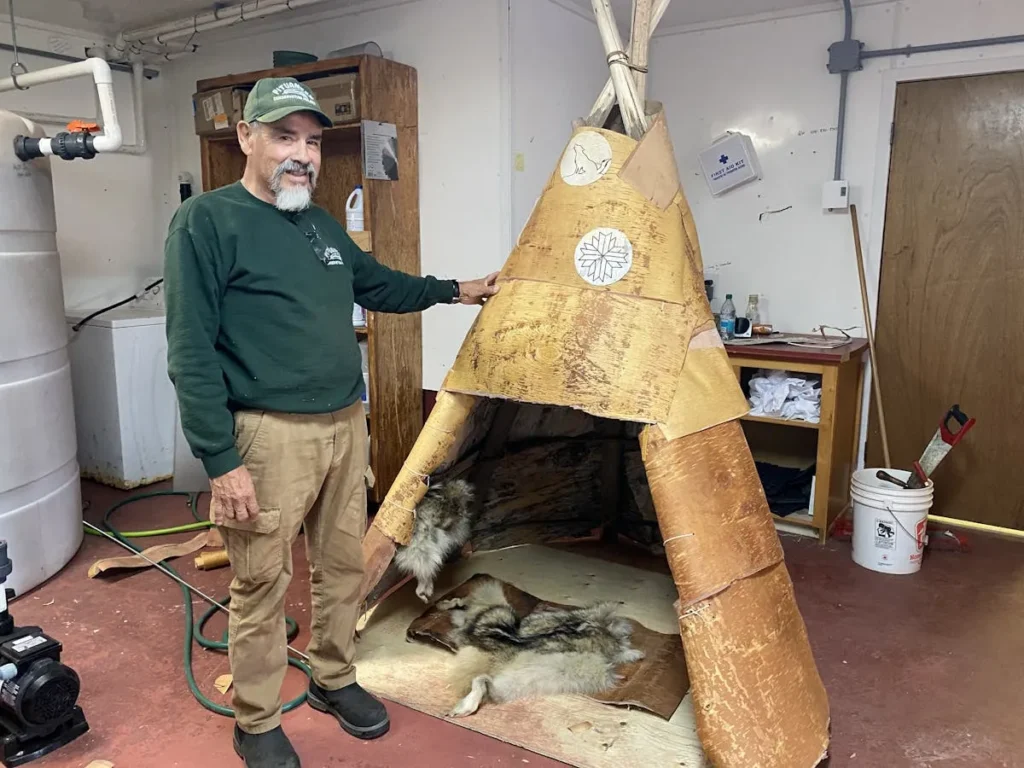
“I’m a basket weaver right now,” he said. “This is something I’ve been doing for many years.”
Over the past few months, the project members have involved themselves with quill workshops, drum making, wigwam making and birch bark harvesting.
Hog Island is a spiritual place, said Bernard. It has been used by Mi’kmaq for centuries, for ceremonies and fasting.
Benard added that once, his brother went to the Island and heard drumming – but nobody was present.
“All those people that have gone over there are probably still there in spirit,” he said. “
When you’re fasting, you get to see things. You get to see a lot of visions that come to people that are fasting over there. So, it’s very spiritual. The place is sort of protected by the spirits, too.”
Conservation
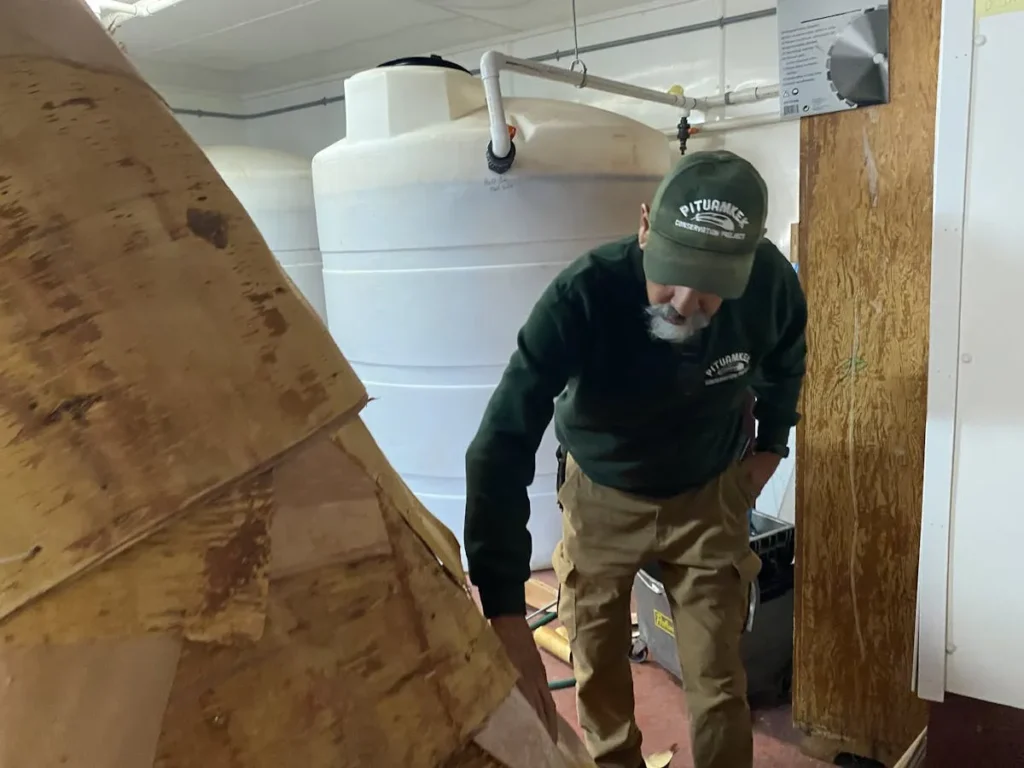
Now in its second year of operation, the Pituamkek conservation project is part of the Indigenous Guardians program.
Funded by Parks Canada and led by Indigenous communities across Canada, the Guardians operate in areas that are already or under consideration to become national parks or national park reserves.
Many of the programs are different in practice, but all place emphasis on ecological conservation, cultural heritage and Indigenous leadership.
The Pituamkek conservation project offers training and development opportunities for Mi’kmaw community members. Its members often work alongside other conservation organizations to conduct projects blending traditional Mi’kmaw knowledge and modern science.
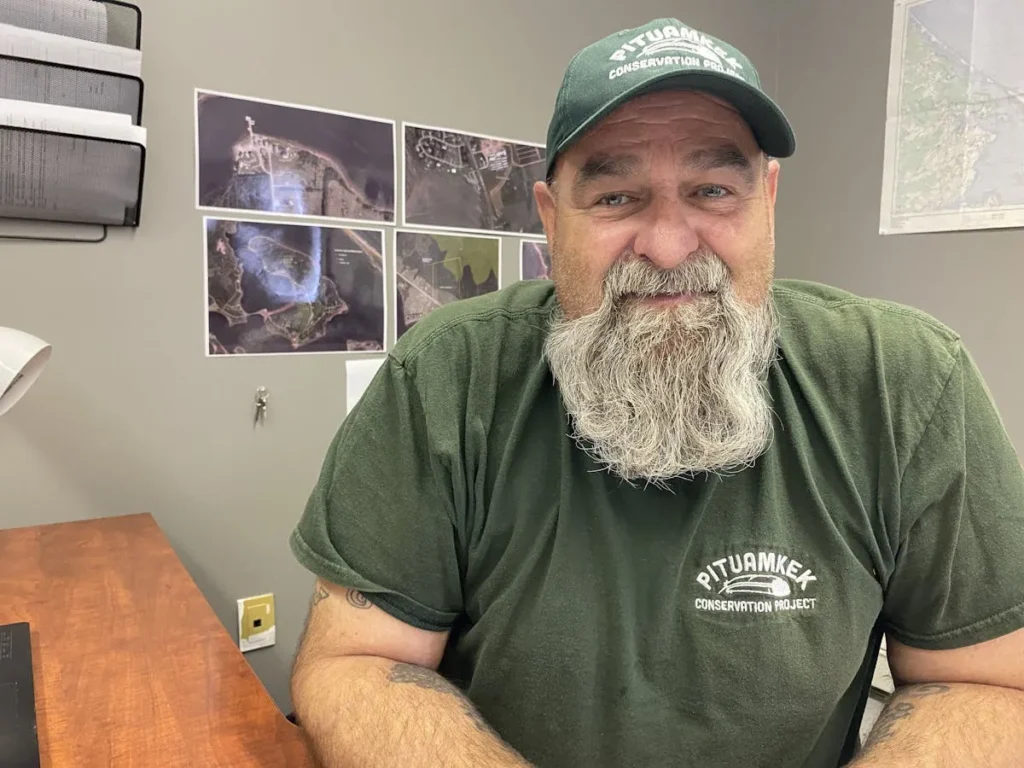
The program runs for 16 weeks, from June to October.
One of the goals of the Pituamkek conservation pProject, said Eric Tremblay, project manager with Parks Canada, is to train members of the local Mi’kmaq community on ecological surveys, including taking stock of vegetation and wildlife.
The group’s findings go to L’nuey, which has taken a leadership role in the Pituamkek project, which decides what to share.
“The bird colonies, they share with Parks Canada,” said Tremblay. “The traditional knowledge stuff we gather, they will keep to themselves, and they will share only what they decide to share. That’s the deal, and that’s the way it should be. Traditional knowledge belongs to them.”
“It should be the way of the future … Including Indigenous people … instead of excluding them.”
– Eric Tremblay, Pituamkek conservation project manager
Tremblay said he considers the task the highlight of his 32-year career with Parks Canada and feels he has trained specifically for this moment.
Knowledge gathering isn’t new to Tremblay, but one of the biggest new lessons he’s taken away is that co-management between Indigenous people and the government can and does work.
“It should be the way of the future,” he said. “Including Indigenous people … instead of excluding them.”
Wildlife
Conservation technician Darcie Augustine has focused on the Islands’ bats and birds as part of her involvement.
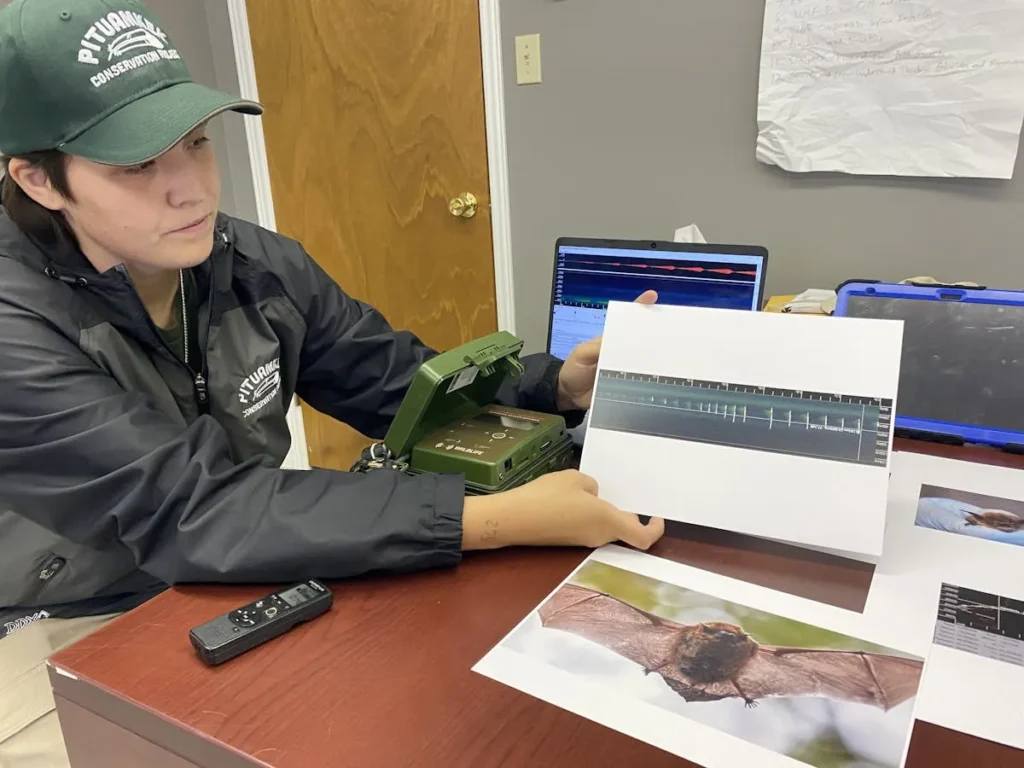
“This year, we had actually put a bat detector on Hog Island and discovered the little brown bat species,” said Augustine.
The device works by picking up sound frequencies of bat noises. After about a week, Augustine looked through the data and used the frequencies to determine which species of bat was in the area at the time.
Other wildlife the team has documented on the Islands includes bank swallows, kingfishers and foxes.
“It makes me feel connected, in a way. I remember being on the archeology sites and finding arrowheads and pottery, like, ‘That’s so cool. My ancestors were actually here,’” said Augustine. “I’d never been to Hog Island before this project, so it was really cool to set foot over there and find all this stuff.”
Vegetation
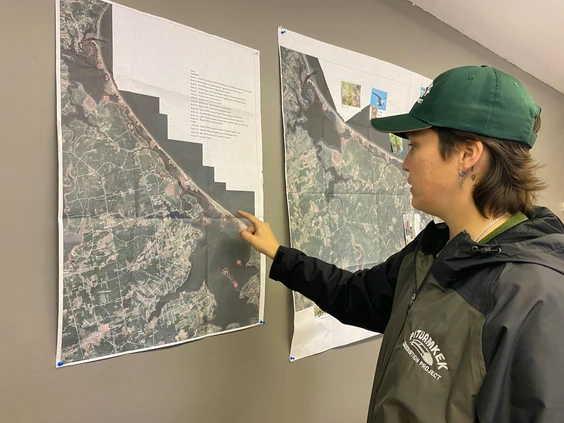
As part of the project, Lennox Island resident Kelly Sark has focused on the Islands’ vegetation, including documenting locations of plants like sweetgrass, and how much damage Lennox Island endured following post-tropical storm Fiona.
“When our elders are looking for a certain place to pick their medicines, that could show them on the map, on GPS, this is where we found it, so you can find a whole bunch here,” said Sark. “Instead of them looking around all day for it. It’s really good to have that resource available.”
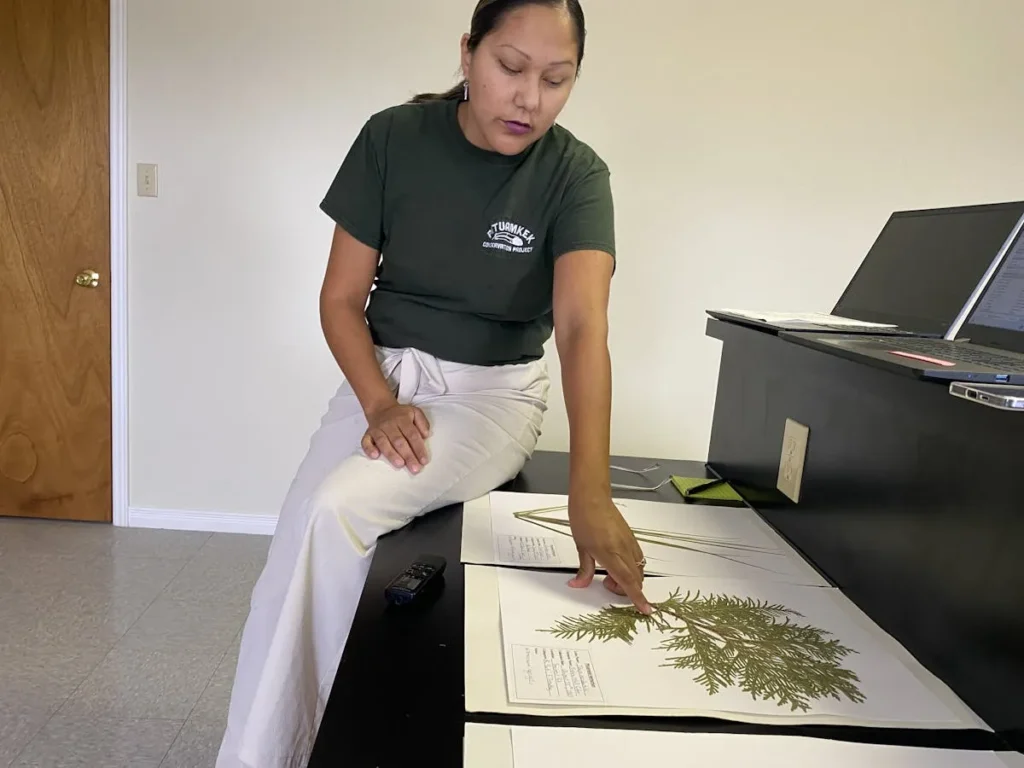
Sark showed the Journal Pioneer a pressed golden thread plant, mentioning that it can be used to brew tea.
“With sweetgrass and certain medicines, you’ve got to be careful how much you drink,” she said. “There is a limit to how much tea you can have.”
While Sark didn’t know much about plants before starting her position, she wanted to learn, especially about edible and medicinal vegetation.
“It gave me a lot more insight about how plants work, what their value is and what their benefits are,” said Sark. “That’s a lot of good knowledge for me to know. This way, I can take this knowledge and bring it back home to my community and to my elders and ask them questions.”