


P.E.I. Mi’kmaq community considers legal action to defend treaty rights
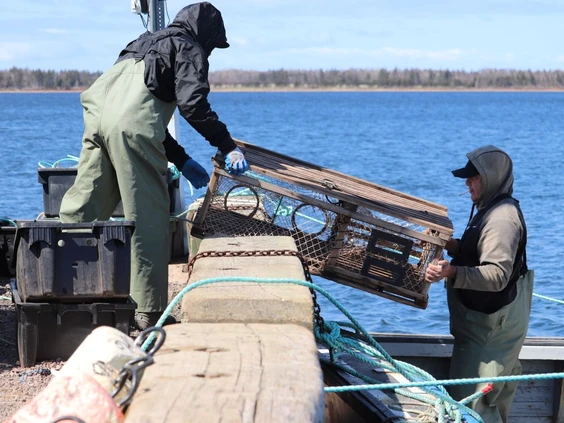
SUMMERSIDE, P.E.I. — Following a second seizure of lobster traps tied to Lennox Island First Nation’s moderate livelihood fishery, the P.E.I. Mi’kmaq community continues to consider its legal options.
On June 8, DFO seized 58 traps related to the community’s self-regulated fishery. That was in addition to about 300 traps seized on May 18.
In a statement to the Journal Pioneer, Lennox Island Chief Darlene Bernard (who has since retired as chief as of the community’s June 14 election), said her nation is using the same number of traps as it did last year and has been voluntarily following DFO harvesting regulation since the moderate livelihood fishery started in 2022.
As with the first seizure, Bernard said there has been no justification given for the disruption or the inconsistent way DFO is policing the fishery.
“To date, there has been no clear or credible justification provided by DFO to limit our treaty-protected fishery, which is quite modest, including no evidence of it posing a conservation risk.
“And even if there were such concerns, the law is clear: conservation measures must first be applied to the commercial fishery before infringing upon a constitutionally protected Indigenous right. Mi’kmaw fishing rights take precedence and must be respected,” said Bernard.
Marshall decisions
Lennox Island’s moderate livelihood fishery began with 1,000 traps in 2022. Last year, that was increased to 1,500. Bernard said during a previous interview that DFO did not raise significant issues with this 2024 increase, but in 2025, DFO officials began asking Indigenous fishers to use DFO tags on their traps. She also said officials informed her, days before the start of the commercial fishing season, that only 1,000 traps had been authorized by the department.
Bernard said she takes new Prime Minister Mark Carney at his word when he speaks about protecting Canada’s constitutional obligations to Indigenous people, but DFO’s actions do not help that goal.
“This enforcement action by DFO is a slap in the face to that commitment. Reconciliation cannot happen when one arm of government is advancing our rights while another is actively working against them,” she said.
“Reconciliation cannot happen when one arm of government is advancing our rights while another is actively working against them.”
— Darlene Bernard, former Lennox Island chief
DFO issued a statement in response to questions from the Journal Pioneer as to why the most recent trap seizure was conducted.
It pointed to the second Marshall decision by the Supreme Court of Canada, which noted that the rights of Indigenous communities to pursue a “moderate livelihood” by hunting and fishing is “subject to regulation, provided such regulation is shown by the Crown to be justified on conservation or other grounds of public importance.”
Therefore, it argues, “DFO’s approach to regulating all fishing is consistent with the Marshall decisions.”
DFO declined to provide further information as it said the investigation into both incidents is ongoing.
Legal options
As for what happens now with Lennox Island’s moderate livelihood fishery, Bernard has said that it will continue, though the community has also expressed a desire to pursue programs designed to increase Indigenous access to the regular commercial fishery.
The community also continues to weigh its legal options.
“We are actively pursuing legal remedies related to this seizure and to a prior one earlier this season. While these processes take time, we remain committed to defending the rights of our people and holding the Crown accountable to its legal obligations.
“Our Council remains open to respectful, good-faith discussions with Canada in a way that upholds our treaty rights, ensures safety and sustainability, and supports economic dignity for Mi’kmaw families. However, these repeated seizures undermine that path forward.”